
Caseware Consolidation
Automate financial reporting with Caseware Consolidation
Aggregate entities, eliminate intercompany balances, and translate foreign currencies with confidence.
Stop struggling with manual spreadsheets and “broken links” in your group audits. Caseware Consolidation provides a powerful engine to aggregate multiple entities, manage intercompany eliminations, and handle foreign currency translations all within a single, secure engagement file.
Powerful Caseware Consolidation features for complex group structures
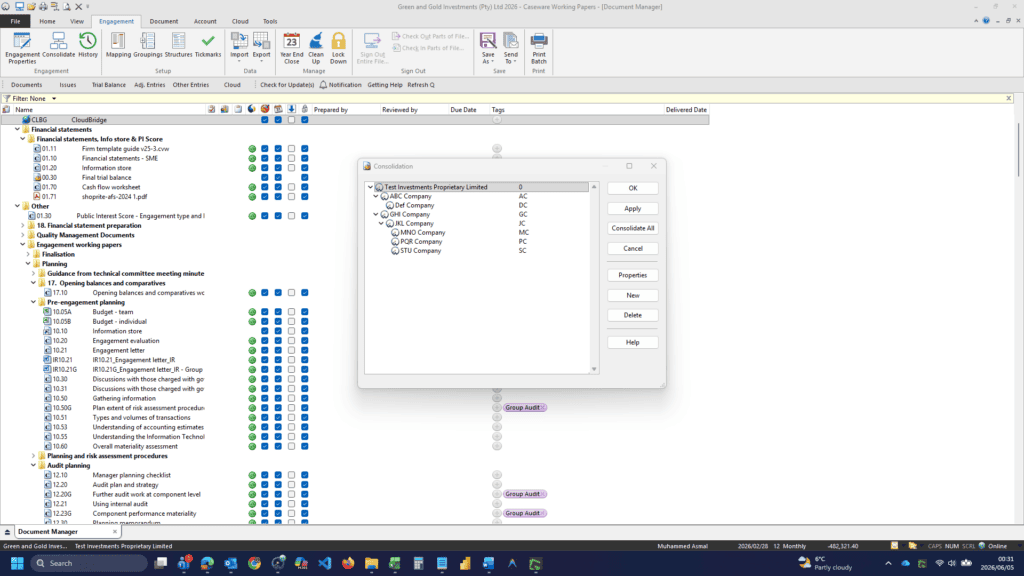
Hierarchical group trees
Define your group structure with Parent-Subsidiary relationships, set ownership percentages, and designate which entities are consolidated.
Elimination entries
Use a dedicated journal type for intercompany eliminations. Post entries at the "Group" level that automatically offset balances across subsidiaries without affecting the individual entity's underlying trial balance.
Multi-tiered consolidation levels
Handle "groups within groups" with ease. You can create sub-consolidations for specific regions or divisions that then roll up into a final global master file. This allows for localised reporting at the sub-group level while maintaining a single, live link to the ultimate parent entity.
Smart referencing tool
Add cross-references, tick marks, and links to supporting documents, improving traceability and audit clarity
The standard for complex groups
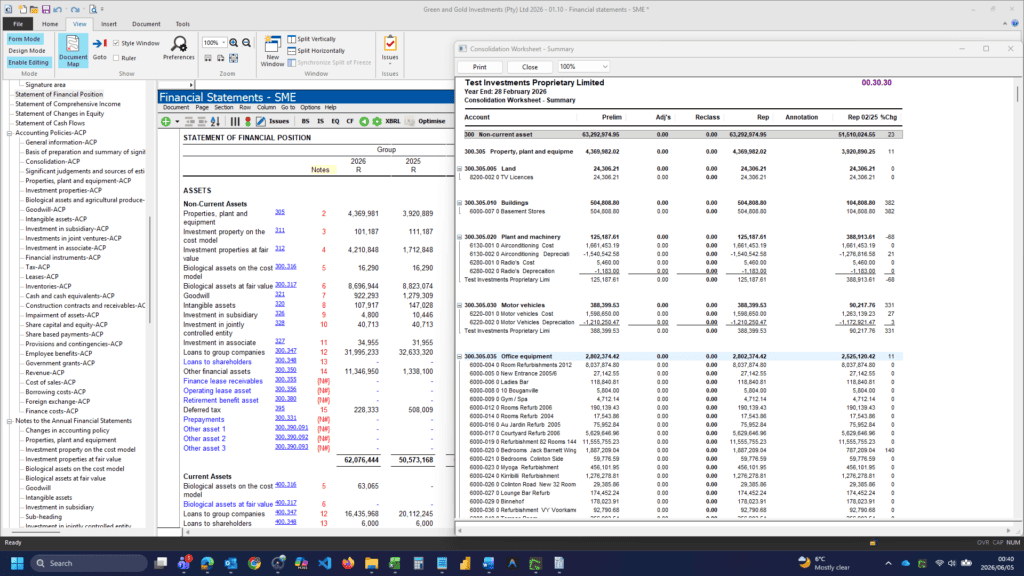
Trusted by JSE-listed entities and global conglomerates for statutory reporting, this solution delivers the mathematical precision and audit-trail transparency complex groups demand. Automated cross-checks validate that consolidated figures reconcile to every subsidiary, with instant drill-down from any consolidated number to a specific trial balance. Built on a scalable architecture, it manages hundreds of entities within a single Master engagement file.
Governance benefits of Caseware Consolidation
Automated consolidation processing
Automatically roll up balances from subsidiaries into the consolidated group file, ensuring updates flow through the consolidation structure with minimal manual intervention.
Flexible multi-entity analysis
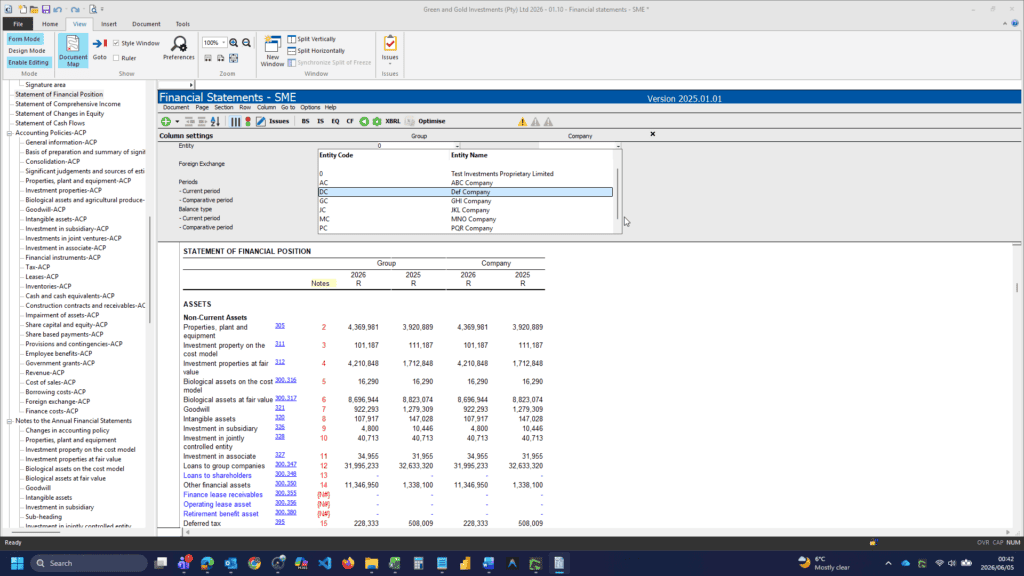
View trial balances and financial data by entity, sub-group, or consolidated level, making it easy to analyse performance and identify trends across the organisation.
Consolidated financial statements
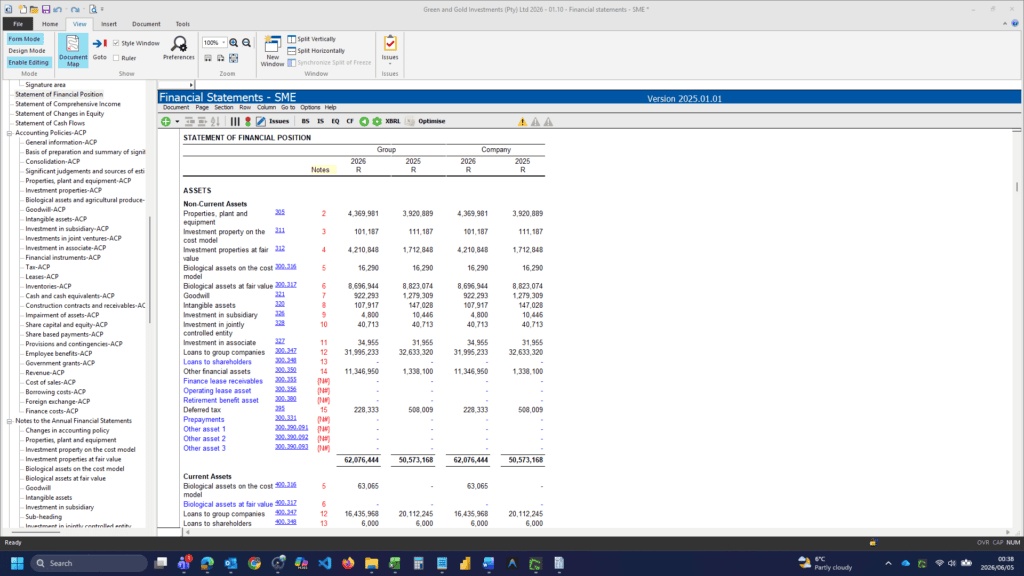
Generate consolidated financial statements and working papers that present the financial position and performance of the entire group as a single economic entity.
Centralised group reporting
Maintain all entities, consolidation adjustments, and reporting outputs within one engagement file, helping teams improve consistency and reduce reporting risk.
How to set up Caseware Consolidation
Create the “consolidator” file
Start a new Working Papers file that will act as the Parent or Consolidated shell.
Define the entity structure
Go to Engagement > Consolidate. Click New to add subsidiaries. Enter the name, ownership percentage, and functional currency for each entity.
Link subsidiary files
Internalise by copying the data into the parent, or externalise by linking to existing Caseware files. Externalising supports live audits as the parent updates whenever a subsidiary file changes.
Import and map accounts
Once linked, subsidiary trial balances populate the parent file. Map these accounts to your consolidated chart of accounts.
Post consolidation journals
Use the Adjusting Journal Entries screen and select the Consolidation journal type to post intercompany offsets. Run the Consolidated Trial Balance report to review final Group figures.
How to Set Up Caseware Consolidation
Create the “Consolidator” File: Start a new Working Papers file that will act as the Parent or Consolidated shell.
Define the Entity Structure: Go to Engagement > Consolidate. Click New to add subsidiaries. Enter the name, ownership percentage, and functional currency for each entity.
Link Subsidiary Files: Internalise by copying the data into the parent, or externalise by linking to existing Caseware files. Externalising supports live audits as the parent updates whenever a subsidiary file changes.
Import and Map Accounts: Once linked, subsidiary trial balances populate the parent file. Map these accounts to your consolidated chart of accounts.
Post Consolidation Journals: Use the Adjusting Journal Entries screen and select the Consolidation journal type to post intercompany offsets. Run the Consolidated Trial Balance report to review final Group figures.
Strengthen your group reporting environment
Complex group structures require clarity, control, and traceability. Caseware Consolidation equips governance-driven finance teams with a structured consolidation framework that supports statutory reporting and audit readiness.
Contact us to see how Caseware Consolidation can support your group reporting strategy.